Lüning 24: Digital B2B portal with vendor integration & Shopware
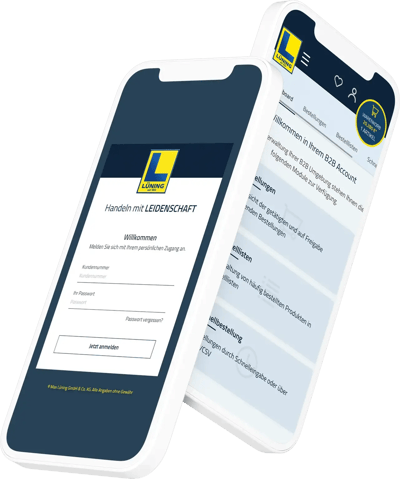
Since 1853, Lüning has been a leading food wholesaler supplying petrol stations, retailers, and gastronomy businesses. With the launch of a digital B2B marketplace based on Shopware, the company is taking a forward‑looking step in digitizing its B2B sales.
Building a digital B2B marketplace – with supplier integration, pricing logic, and centralised data management
Shopware‑based B2B portal with vendor login, automated data import, and intelligent checkout
Scalable marketplace with personalized customer views, efficient processes, and a clear product structure
Structured supplier integration & customer‑specific pricing logic
As an established food wholesaler with a nationwide distribution network, Lüning planned to introduce a central digital trading platform on which both its own assortments and products from external suppliers could be structured and managed efficiently.
The key challenges lay in the structured integration of marketplace suppliers, the automation of data flows, and the implementation of customer‑specific pricing models, all while simplifying the ordering process for business customers.
Umsetzung eines B2B-Marktplatzes auf Basis von Shopware 6
Development of a vendor portal for integrating external suppliers
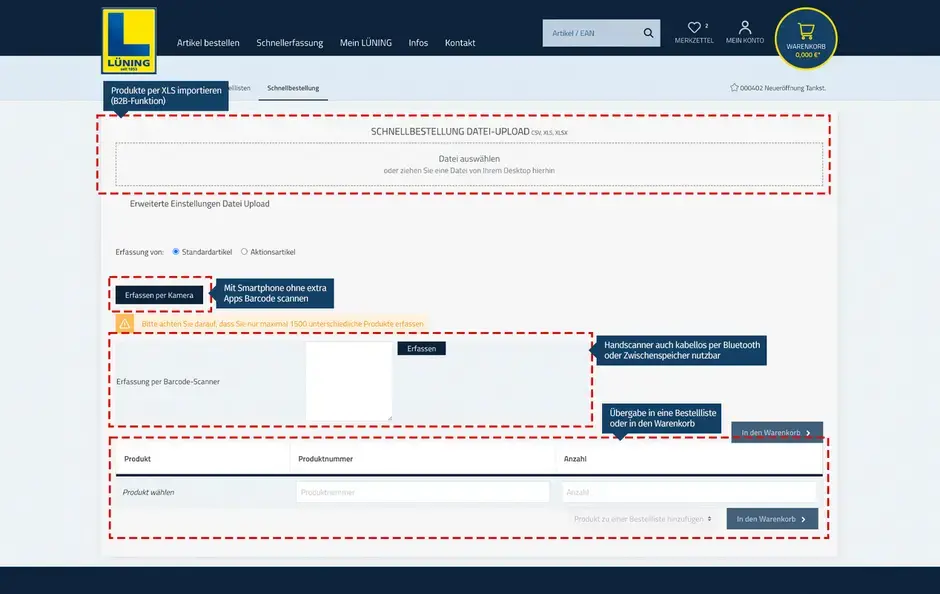
Automated product data import via a central data center
Mapping customer‑specific pricing and assortment logic
Checkout logic with supplier‑specific order separation
Implementation of customer‑group‑specific visibility rules
NUMEROUS FEATURES FOR A SCALABLE PLATFORM ARCHITECTURE
Lüning’s existing B2B commerce system was strategically extended with marketplace‑ready capabilities. The goal was to consolidate both in‑house assortments and external supplier products within a unified user experience—without compromising data quality, pricing logic, or checkout workflows.
At the heart of the solution are automated product data imports, granular pricing and assortment controls, and a checkout architecture that routes orders per supplier—precisely aligned with the requirements of a digital B2B wholesale marketplace.
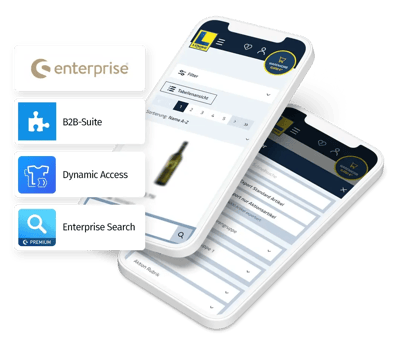
The solution is built on Shopware 6 Enterprise with the B2B Suite as the technical foundation. On this basis, a multi‑tenant B2B portal was implemented in which external suppliers can be created and managed in a structured way. Each vendor receives a company profile with its own sales conditions – from minimum order value to shipping method.
As a result, the system functions not only as a B2B shop, but as a scalable online marketplace for business customers.
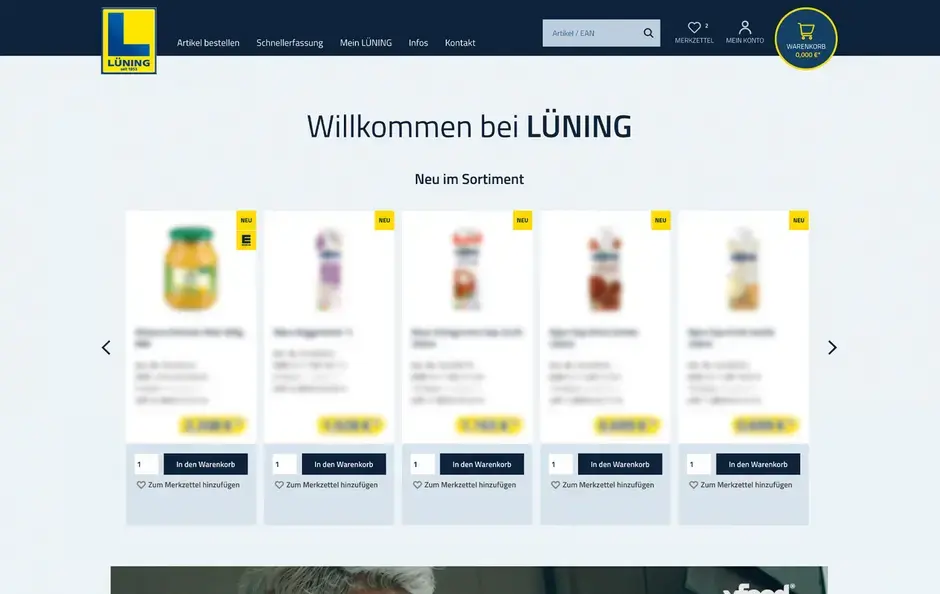
The burgdigital data center serves as the central hub for efficiently integrating external vendors. Suppliers maintain their products directly in the system—including texts, images, and price lists. All third‑party items appear in the shop just like in‑house products and leverage familiar features such as categorization, filtering, and wishlists.
Automated validation mechanisms ensure high data quality and a consistent presentation across the entire B2B marketplace. The solution minimizes manual coordination effort and delivers a uniform product experience—regardless of the individual vendor.
Standardized import processes ensure that vendor product data is synchronized on a regular basis. The data center supports both manual uploads and automated interfaces, including error checking and logging, to guarantee that all marketplace items are displayed up‑to‑date, accurately, and in full.
In parallel, multi‑level pricing and assortment rules were implemented so that each customer group receives its own conditions—including for vendor products. This creates a fully personalized purchasing experience across the entire B2B marketplace.
In B2B wholesale, supplier allocation and sales conditions are often complex. The checkout was therefore enhanced so that the shopping cart is automatically split between the participating vendors—including individual shipping methods and payment terms. For the customer, the ordering process remains convenient, while clear, vendor‑specific workflows run in the background.
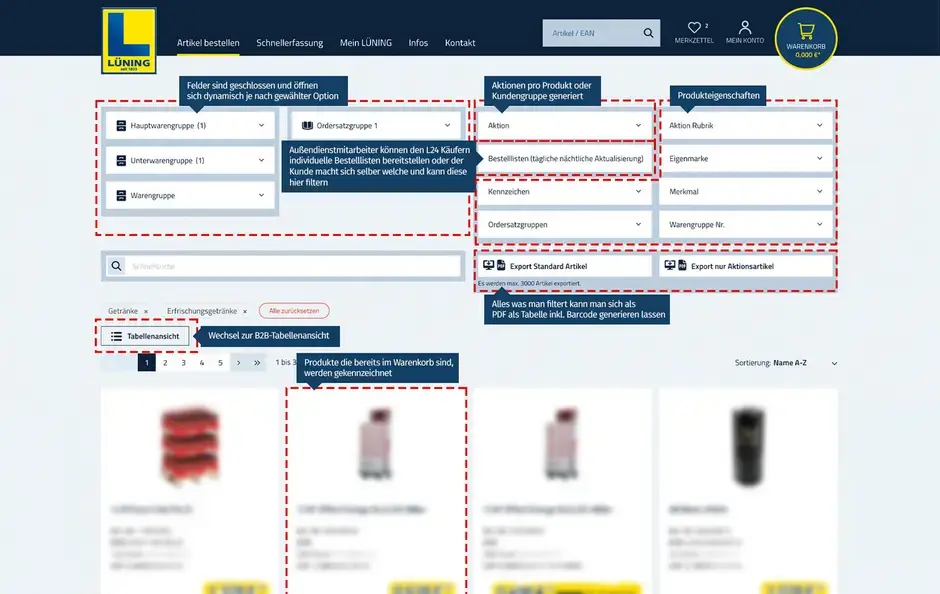
To enable business customers to search specifically for certain manufacturers or product lines, the filter logic was also extended: all items can be sorted by vendor—ideal for a diverse B2B food and non‑food assortment. This increases transparency for customers and boosts partner visibility across the B2B online marketplace.
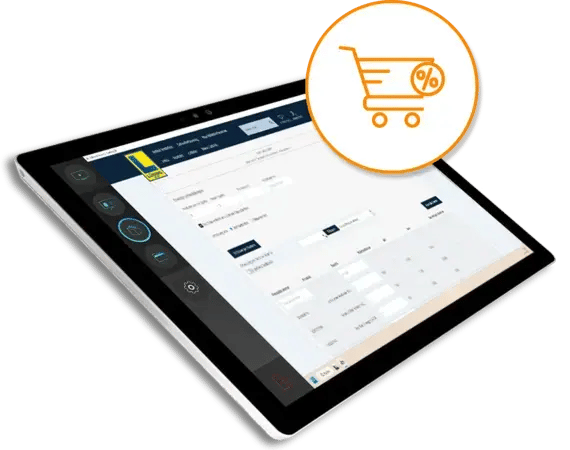
CENTRALLY MANAGED B2B MARKETPLACE WITH A SCALABLE STRUCTURE
By implementing the digital marketplace model on Shopware, Lüning now operates a powerful platform that fully meets the demands of modern B2B wholesale. Clear process logic, automated data flows, and flexible pricing models ensure that every stakeholder benefits from the solution:
Customers benefit from a transparent, personalized purchasing experience
Vendors gain access to an expanded customer base via an established infrastructure
Lüning secures long‑term market share with a flexible, future‑ready sales model
The new B2B marketplace thus forms a central digital foundation for growth—modularly expandable, operationally stable, and highly user‑centric in day‑to‑day handling.
FREQUENT QUESTIONS – CLEAR ANSWERS
A B2B marketplace is a digital trading platform where multiple vendors offer products or services to business customers. Unlike traditional online shops, a marketplace supports centralized assortment management, customer‑specific pricing, and the simultaneous processing of orders from multiple suppliers within a single system.
A B2B online marketplace significantly broadens the available assortment, streamlines procurement for business customers, and opens up a new sales channel for suppliers. Operators benefit from greater reach, automated processes, and stronger customer loyalty through personalized offers.
A B2B wholesale marketplace is typically built on a multi‑tenant platform such as Shopware. Suppliers receive their own logins, manage products via a central data center, and maintain prices, quantity scales, and commercial terms. During checkout, orders are automatically split by vendor—including shipping, payment, and documentation.
A B2B portal is typically a company‑owned ordering platform for business customers, usually with fixed assortments. A B2B marketplace, by contrast, also opens up to external suppliers and consolidates multiple vendors on a shared platform. Both models can be combined technically—for example, as implemented at Lüning.
B2B marketplaces are particularly well‑suited to industries with many manufacturers or suppliers—such as food wholesale, trades, construction, industrial supplies, or medical products. The platform makes it possible to map complex pricing and assortment structures efficiently and to onboard new vendors quickly.
FROM OUR PRACTICE