Data integration for ERP, PIM & e-commerce systems
BIM - BURGDIGITAL IMPORT MIDDLEWARE
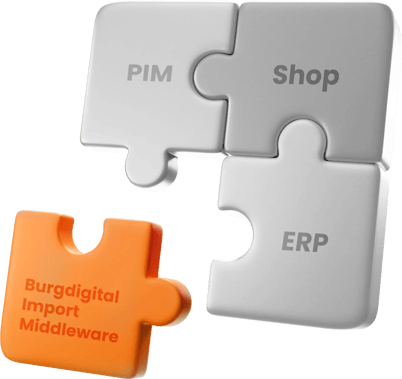
BIM - BURGDIGITAL IMPORT MIDDLEWARE is a powerful headless middleware for the automated processing of structured data from CSV, XML or APIs - seamlessly integrated into ERP systems such as SAP, PIM solutions and store systems such as Shopware.
Middleware for the automated integration of your systems
Digital business models rely on stable data flows between systems. This is precisely where the BURGDIGITAL IMPORT MIDDLEWARE (BIM) comes in: it acts as a central interface between heterogeneous IT systems and ensures standardized, maintainable and automated data processing.
Thanks to its modular headless architecture, BIM can be flexibly integrated into existing infrastructures as well as the burgdigital DataCenter and DataGateway - for future-proof platform strategies with clearly defined interfaces.
What is BIM?
BIM is a flexible middleware for the automated processing and transfer of structured data - e.g. from CSV, XML or APIs - to systems such as ERP, PIM or e-commerce platforms.
Why is middleware relevant?
Modern IT landscapes consist of many systems that need to exchange data reliably. Middleware creates the necessary connection for this.
How does BIM provide concrete support?
BIM automates data flows, reduces manual effort and ensures consistent information between ERP, PIM, store system and other applications.
Middleware as the key to data harmonization
BIM connects what belongs together
Whether ERP, PIM or platforms: BURGDIGITAL IMPORT MIDDLEWARE ensures consistent data flows and reduces manual processes.
Middleware in use: how to network your IT landscape intelligently
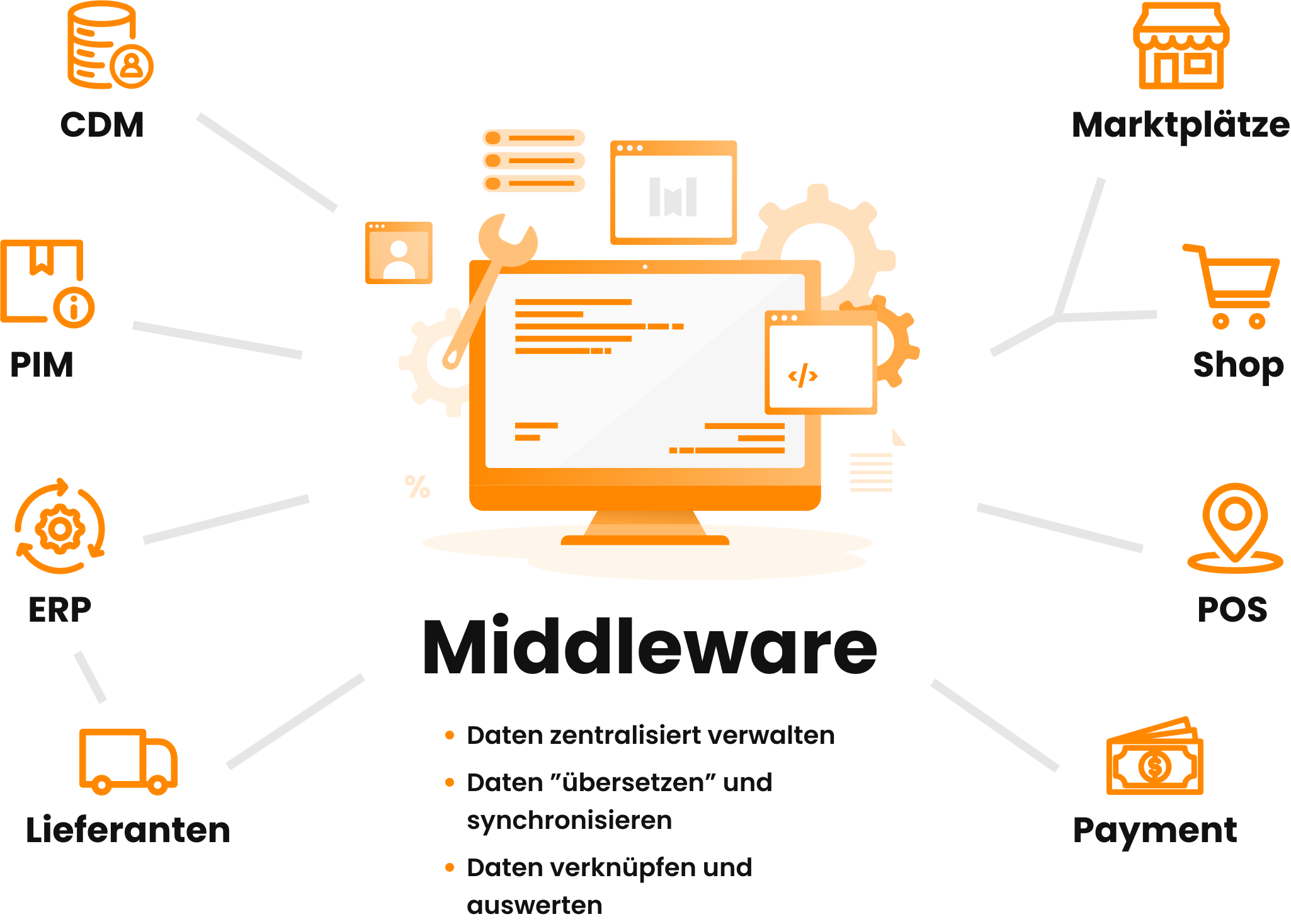
Middleware serves as a bridge between different applications and connects systems with each other in a targeted manner. It ensures smooth, automated data exchange between your applications - quickly, flexibly and securely. Less manual intervention, consistent data and maximum scalability: this is how you create the basis for a future-proof IT infrastructure.
Automated data processes along your value chain
Typical application scenarios for BIM in system integration
Whether supplier data import, platform connection or ERP synchronization - BIM is used wherever structured data needs to be reliably transferred, enriched and made available between systems.
Product data import from supplier systems
CSV, XML or API-based article data is automatically transferred, transformed and imported into the PIM or store.
Synchronization between ERP and store system
Stocks, prices and availability are regularly synchronized - across all channels, error-free and in real time.
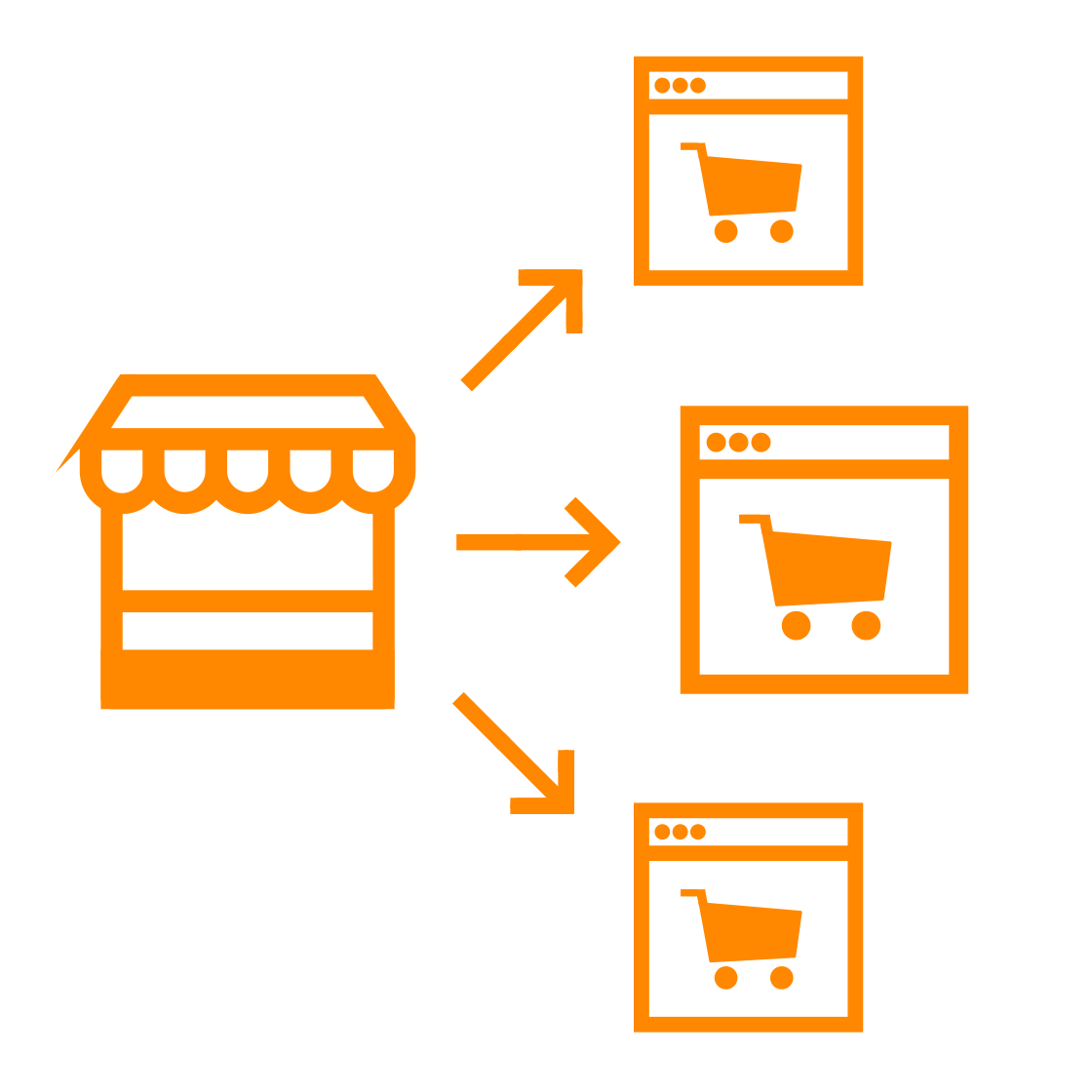
Connection to external marketplaces & platforms
Product data and order information are exported in a standardized way - to all industry-specific marketplaces.
Linking POS & online systems
BIM ensures consistent customer data, prices and shopping baskets between stationary retail and e-commerce.
Centralized maintenance of product information (PIM)
Data from various sources (ERP, CDM, suppliers) is merged in the PIM, enriched and played out in target systems.
Automated provision of payment and invoice data
Payment status or invoice data is synchronized between payment systems, stores and accounting.
Central data hub for digitally controlled processes
Using BIM as a powerful integration solution
BIM is a powerful headless middleware that can be flexibly integrated into existing IT infrastructures such as data centers, data gateways and third-party systems. It uses clearly defined interfaces to centrally coordinate a wide range of data sources - without changing existing systems. This creates scalable, maintainable and future-proof processes that can be precisely adapted to individual requirements.
Headless architecture for modular systems
Integration in data center & data gateway
Data enrichment with business logic
Reliable forwarding to target systems
Challenges of complex IT environments
Based on years of experience and continuous further development, BIM is a modular "toolbox" that easily implements individual requirements with automated workflows, validated transformation processes and high scalability.
Companies work with a variety of systems that use different formats such as CSV, XML or APIs. Without a central middleware, complex and error-prone integration processes arise.
Many companies still manage their data manually, which is not only time-consuming but also highly prone to errors. BIM automates these processes and significantly reduces manual effort.
Different systems often use their own data structures and terminology. BIM harmonizes the data and ensures a uniform structure that enables seamless transfer.
Growing data volumes often pose challenges for existing systems. Without scalable middleware, performance problems and bottlenecks can occur. BIM ensures efficient processing even with large volumes of data.
Companies must adhere to strict data protection guidelines and ensure that their data processing systems comply with legal requirements. BIM offers integrated security mechanisms that ensure data integrity and data protection.
Maximum compatibility thanks to versatile interfaces
Seamless data integration for optimized business processes
Reliable data integration is crucial to ensure that different systems, platforms and data formats work together seamlessly. BIM connects interfaces in a standardized and cross-system way, enabling information to be exchanged efficiently, avoiding redundancies and reducing integration costs.
Supported data sources and formats
Whether ERP, CRM or PIM systems - with a flexible and scalable interface architecture, the "BURGDIGITAL IMPORT MIDDLEWARE" enables fast and reliable data exchange.
Integration with ERP, PIM and CRM systems as well as marketplaces such as Shopware, Shopify and SAP to synchronize data consistently and manage it across platforms.
Reliable data transfer
How BIM data processing works
Automated data import & processing
Transfer of data and automated validation, transformation and enrichment.
Enrichment with business logic
Product data can be automatically supplemented with categories, attributes or price scales.
Standardized data preparation
Data structured according to uniform standards and optimized for further processing.
Seamless integration
The processed data can be easily transferred to ERP, PIM or store systems.
Intelligent networking of ERP, PIM & store systems
Connecting systems smartly - with BIM as an integration platform
Reliable system integration is crucial to ensure the smooth exchange of data between ERP, PIM and store systems. BIM assumes the role of a central interface that transfers information in a structured manner and enables stable communication between all components - regardless of system type or provider.
Flexible integration into existing IT landscapes
Whether standard software or in-house development - BIM can be flexibly integrated into existing structures. The middleware supports integration scenarios with ERP systems such as SAP as well as with individually developed applications. Thanks to its open architecture, existing processes can be expanded and system landscapes efficiently connected - without the need for in-depth intervention.
Practical examples of efficient system integration
Customers who use BIM successfully
Numerous companies are already using BIM to simplify complex data processes and efficiently network their system landscapes. The following examples show how the middleware is used reliably in a wide variety of scenarios.
Simply increase the efficiency of your data processes
Our BIM middleware connects your systems, automates data flows and reduces manual effort - for maximum efficiency, high data quality and sustainable scalability.
More performance for your company
Increase the efficiency of your processes with smart interface solutions and stable system networking. Contact us - and let's improve your project together.
BIM is a modular middleware solution from burgdigital that automatically processes and transforms data from various systems such as ERP, PIM, store or third-party platforms and passes it on via defined interfaces - without changing existing systems.
Thanks to rule-based enrichment and the modular architecture, BIM can also map complex business logic - for example for automatic categorization, price dynamics or individual data mappings.
After an initial meeting, we analyze your system landscape together and define the relevant data flows. BIM is then configured and connected to your requirements - either in stages or on a modular basis, depending on the scope of the project.

.webp?width=1003&height=600&name=csm_burgdigital_data_management_bim_middleware_hero_15c5c8437e%20(1).webp "csm_burgdigital_data_management_bim_middleware_hero_15c5c8437e (1)")




.svg)