Little Greenie
Little Greenie is a family-run online shop based in Hiddenhausen, offering a lovingly curated range of high-quality products for babies and children up to 6 years old. The focus is on natural, low-pollutant items that support healthy development – fully in line with the motto “grow up naturally”. Transparent communication and helpful reviews make it easier for parents to make informed purchasing decisions.
Modernization of the online shop and increased back-office efficiency
Shopware 5 to Shopware 6 migration with JTL ERP integration
High‑performance online shop with significantly increased back-office efficiency
A suitable system for evolved structures
At launch, Little Greenie chose a Shopware 5 store from burgdigital and was able to quickly build reach and market presence. As the online shop grew, however, the demands on back-office processes, inventory management, and overall efficiency increased significantly.
With the end of support for Shopware 5, migrating to a future-proof shop system became essential. At the same time, the existing design needed to be refreshed to highlight sustainability aspects more clearly and communicate the high product quality even more convincingly in digital form.
Migration from Shopware 5 to Shopware 6
Integration of JTL as the merchandise management system
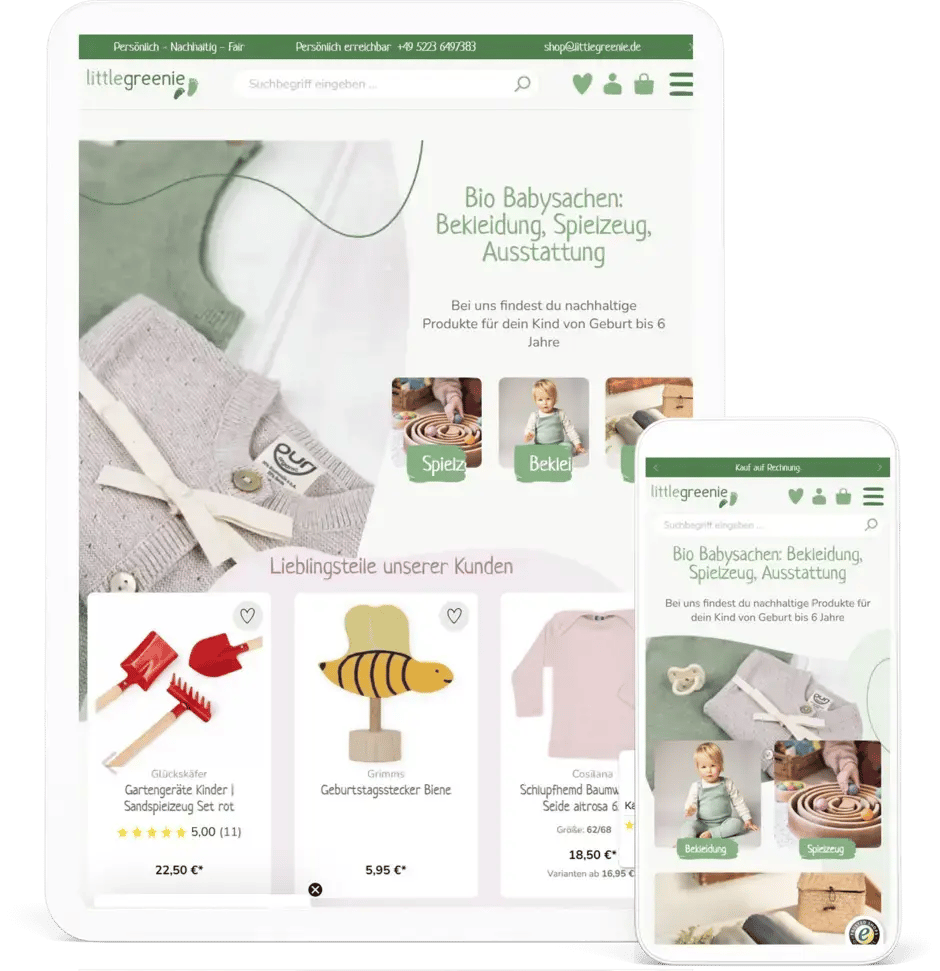
Enhancement of the user experience with a mobile‑first approach
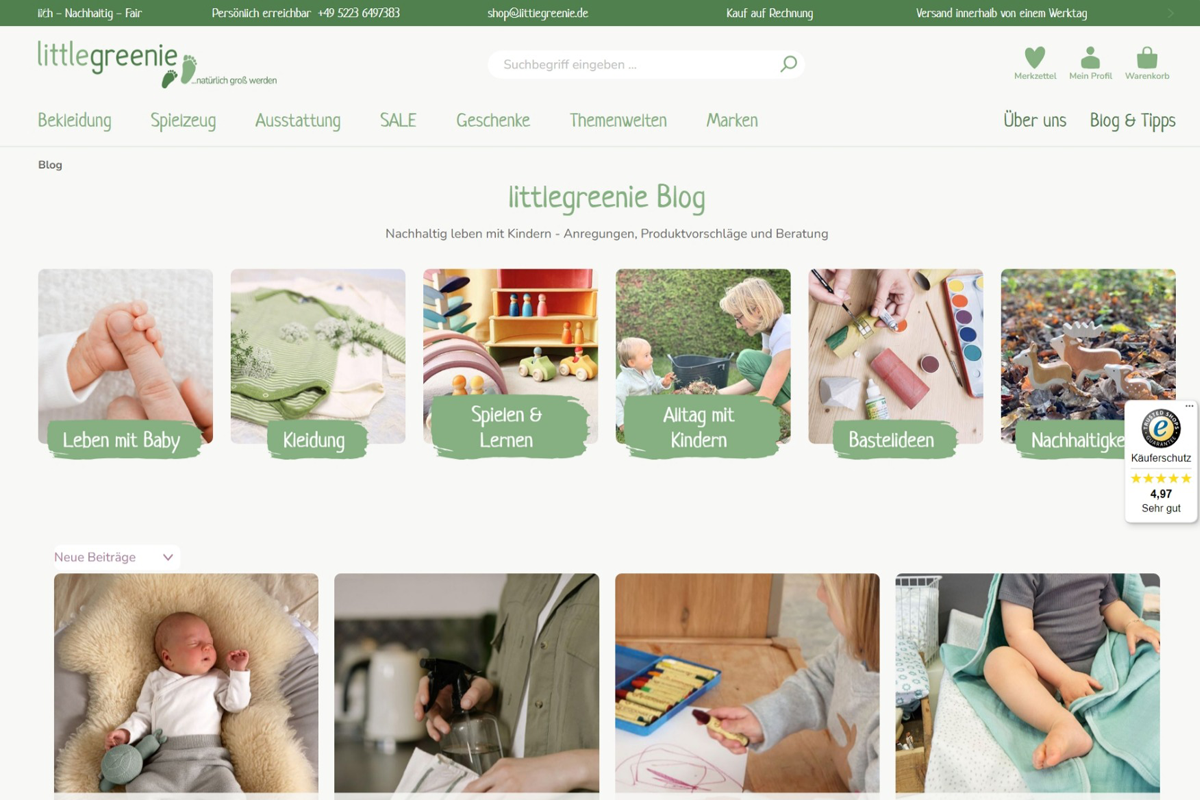
Integration of a dedicated blog section
Integration of Doofinder as an optimized search solution
Granular product filtering and sorting
Optimized checkout for fast order completion

A suitable system for grown structures
To sustainably meet the growing demands of a successful online shop, Little Greenie was migrated to a modern Shopware 6 platform and strategically repositioned. The focus was on intuitive user guidance, consistent product presentation, and efficient back-office processes. With a clear structure, modular content, and centrally integrated editorial and system-based product information, we created a scalable e-commerce solution that meets both the high expectations of the target group and the company’s business objectives.
Following the success with Shopware 5, Little Greenie chose to migrate to Shopware 6 to remain technologically future‑proof and competitive. Because of the fundamentally changed system architecture, a simple in‑place update was not possible – instead, a completely new shop foundation was implemented and all order and customer data were migrated into the new system structure.
The goal of the mobile‑first strategy was to achieve maximum performance across all viewports. Content, images, features, and modules were first defined for mobile devices and then optimized for desktop and laptop views.
Following the mobile‑first principle, content is reduced to the essentials, designs are tailored to smartphones, and unnecessary features are deliberately avoided.
The system migration improved overall performance, enhanced the display of product variants, and optimized the article structure.
Expanded design options enable Little Greenie to independently create unique brand experiences using custom-provided elements—without requiring extensive technical effort.
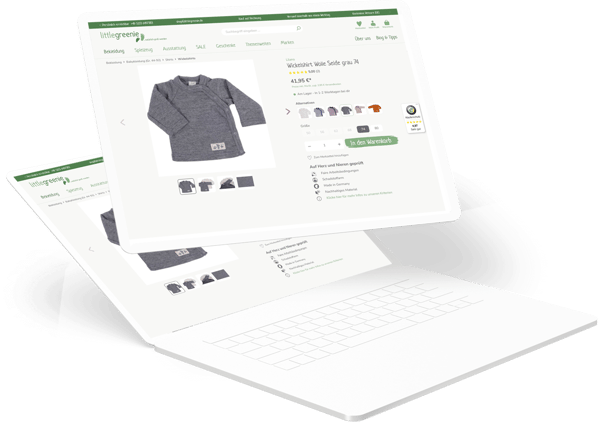
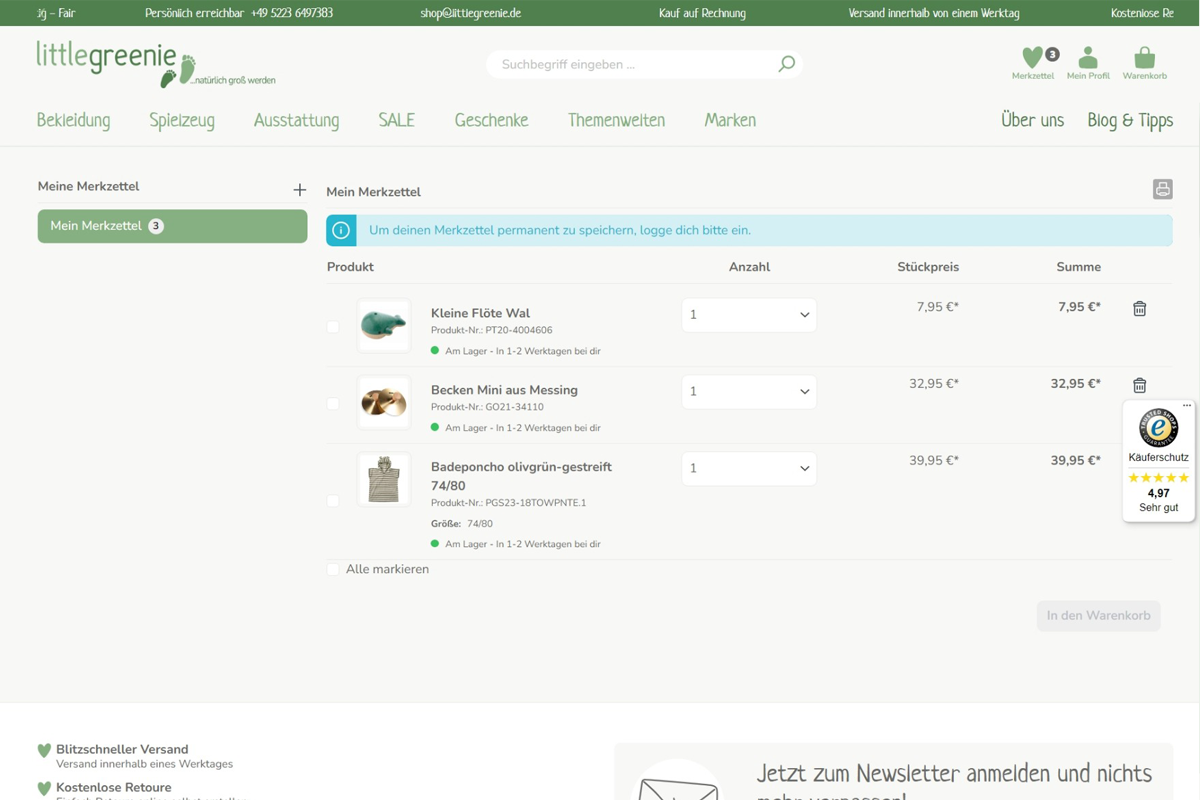
With Shopware 6, key features were implemented, including integration with Doofinder for optimized search, granular filter and sorting options, and an improved checkout process for a smooth purchasing experience. Simplified administration further enhances overall shop usability.
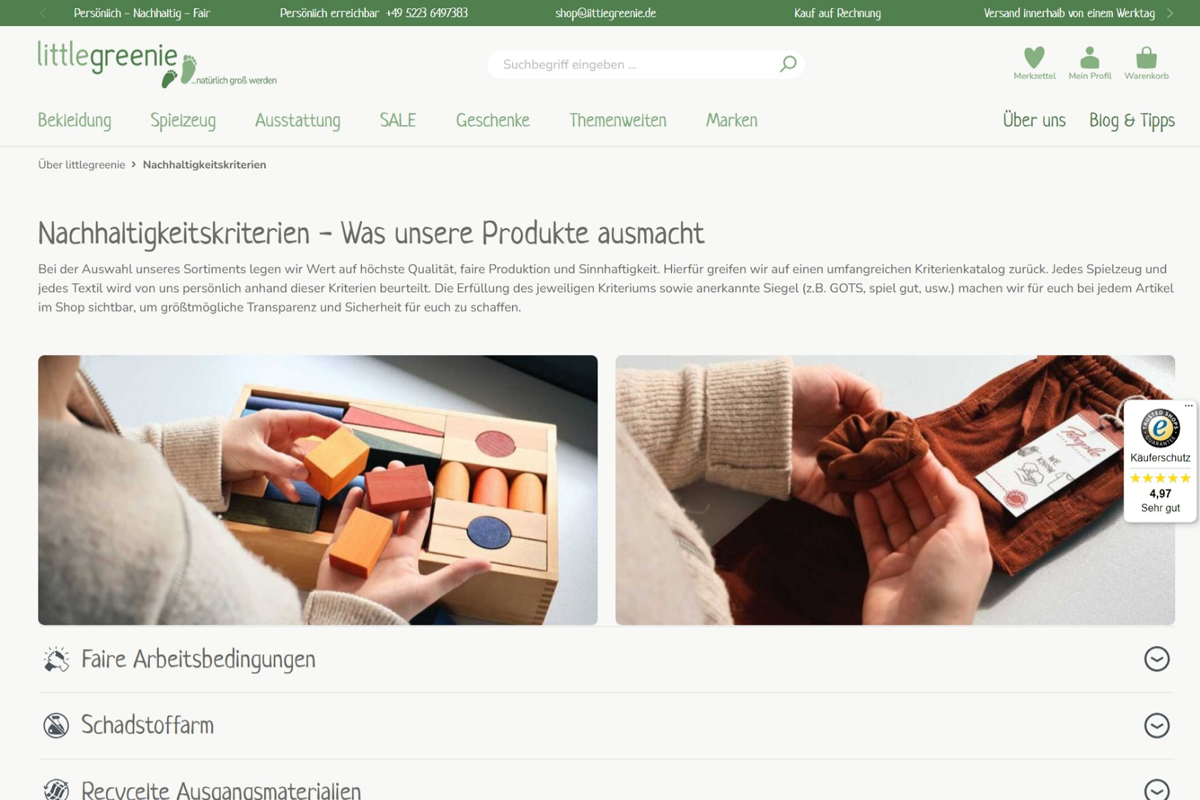
Product and category pages were enhanced so that customers can see not only all key information but also availability, sustainability criteria, and delivery times. In addition, customer reviews, Trusted Shops ratings, and extra payment methods such as PayPal, Ratepay, and credit card are integrated.
As order volumes grew, a professional inventory management solution became essential. Integrating JTL Wawi now centralizes all product, customer, and delivery data. End‑to‑end processes from purchasing and shipping through to returns can be automated and handled far more efficiently.
FUTURE‑PROOF E‑COMMERCE STRUCTURE
With the migration to Shopware 6, Little Greenie now operates on a future‑proof, high‑performance e‑commerce platform that combines design flexibility with technical scalability. The modern system architecture provides ideal conditions for further integrations and the efficient ongoing development of the shop.
Improved performance, streamlined processes, and flexible extensibility together create a solid foundation for sustainable growth. At the same time, customers benefit from a clearly structured, intuitive shopping experience—delivering greater operational efficiency and a compelling brand experience.
HÄUFIG GEFRAGT - KLAR BEANTWORTET
With support for Shopware 5 coming to an end, a future‑proof solution was required. At the same time, migrating to Shopware 6 created an opportunity to modernize the technical foundation, enhance performance and variant mapping, and make back‑office processes more efficient. By rebuilding the system architecture and fully migrating all data, a scalable platform for continued growth was established.
The shop was consistently designed according to the mobile‑first principle. Content, features, and modules were developed for smartphones first and then optimized for larger devices. This ensures maximum performance across all viewports, clear user guidance, and a streamlined, focused presentation – ideal for Little Greenie’s mobile‑centric audience.
With the relaunch, numerous features were enhanced, including optimized search via Doofinder integration, granular filtering and sorting options, and an improved checkout process. Product pages now clearly communicate availability, sustainability criteria, and delivery times. In addition, customer reviews, Trusted Shops ratings, and extra payment methods such as PayPal, Ratepay, and credit card have been integrated.
By integrating the JTL merchandise management system, product, customer, and shipping data are managed centrally. Business processes—from purchasing through shipping to returns—can be automated and controlled more efficiently. This reduces manual effort, improves data flows, and creates a robust foundation for further day‑to‑day growth.

FROM OUR PRACTICE