Accessible web design – BFSG is mandatory
Digital accessibility is no longer optional. Since the Barrier-Free Accessibility Strengthening Act (BFSG) came into force, many companies are required to implement their websites, online shops, and digital services in an accessible way. What was previously considered a quality feature is now a legal obligation – and a key factor for usability, visibility, and digital credibility.
Content
What does “accessible” mean for websites?
The Barrier-Free Accessibility Strengthening Act (BFSG) is based on the AA standards of the Web Content Accessibility Guidelines (WCAG) 2.1. These define when websites are considered accessible and form the binding framework for implementation.
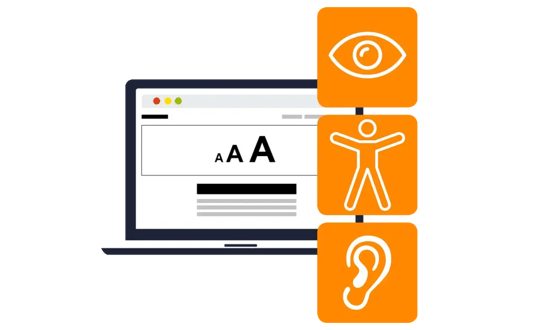
Accessible websites are designed so that content is perceivable, operable, understandable, and technically robust. This means information is not conveyed visually only, functions can be used without a mouse, and sites work reliably across different devices as well as with assistive technologies.
Accessibility requirements act: obligations and opportunities
With the BFSG, the European Accessibility Act is transposed into German law. The aim is to design digital services so that people with disabilities can use them without additional barriers. For companies, this primarily means one thing: accessibility is now a binding legal requirement.
At the same time, accessibility has a positive impact on the quality of digital services. Clearly structured content, easy-to-use websites, and intuitive user guidance not only improve accessibility, but also enhance user experience, discoverability, and trust.
"The power of the web is in its universality. Access for all people – regardless of any limitations – is a fundamental part of that."
Legal requirements: who does the BFSG apply to?
The BFSG applies to private companies that offer digital products or services to consumers. This includes, in particular, websites, web applications, online shops, and mobile apps.
Micro‑enterprises are exempt under certain conditions. Nevertheless, it is advisable even for them to take a strategic approach to accessibility – for example with regard to growth, public-sector clients, or long-term digital quality.
What typical online barriers exist?
In practice, users repeatedly encounter similar obstacles: missing alternative text for images, insufficient colour contrast, forms that cannot be operated via keyboard, or videos without captions. Such barriers not only make access more difficult for people with disabilities, but also have an overall negative impact on usability.
Measures to make digital services accessible
Accessibility results from the interaction of technology, content, and design. Only when all three areas are taken into account can digital services be implemented in a reliably and sustainably accessible way.
Technical accessibility
Technical basics form the foundation of accessible websites. This includes semantically correct HTML, full keyboard operability, and compatibility with screen readers and other assistive technologies.
Editorial accessibility
Content also plays a central role. A clear heading structure, plain language, and meaningful link texts help users to grasp information quickly and interpret it correctly.
Design and user experience
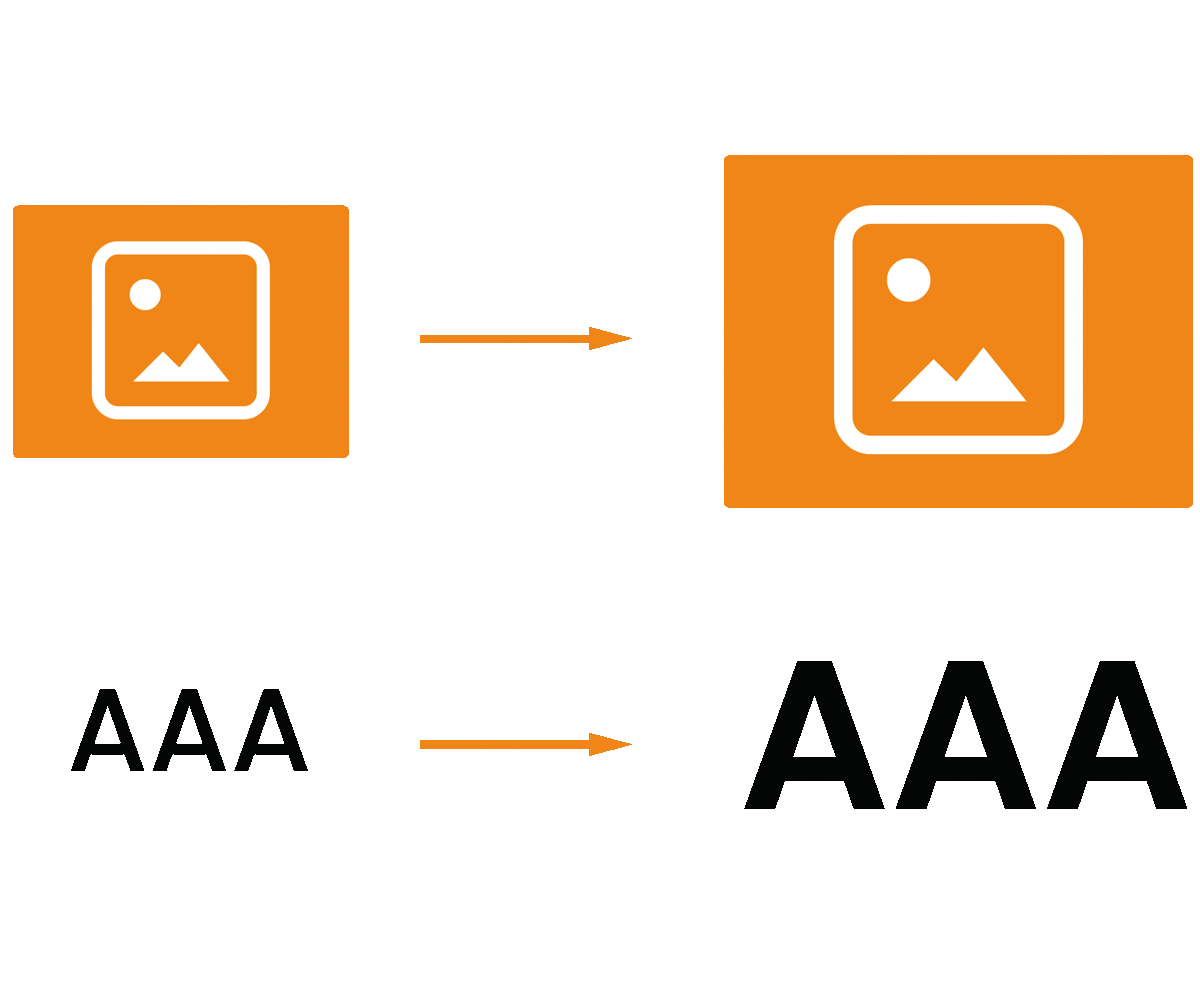
Accessible design relies on sufficient contrast, easily readable font sizes, and consistent navigation. The goal is a layout that provides clear orientation and adapts to different usage situations..
WCAG conformance levels: AA and AAA
For most companies, WCAG level AA is the key benchmark. It represents the standard that is also relevant in the context of the BFSG. Level AAA goes beyond this and is particularly suitable for highly inclusive or public-facing services.
Opportunities of digital accessibility for companies
Accessible websites reach more people, improve usability for all users, and have a positive impact on SEO. Search engines reward clear structures, easy-to-understand content, and clean code – exactly the factors that are also crucial for accessibility.
FAQ – Frequently asked questions about the BFSG and accessible web design
Which websites does the BFSG apply to?
The BFSG applies to digital services provided by companies that offer products or services to consumers. This includes, in particular, corporate websites, online shops, booking flows, and customer portals. What matters is not the industry, but whether the offering is aimed at end users.
Does the BFSG also apply to existing websites?
Yes. The law does not distinguish between new and existing digital services. Websites that are already live must also be accessible if they fall within the scope of the BFSG.
Which WCAG level is mandatory?
As a rule, WCAG conformance level AA is decisive. It is recognised as the minimum standard and forms the basis for the legal requirements of the BFSG.
What happens if websites are not accessible?
In the event of violations of the BFSG, market surveillance authorities may impose measures. In addition, companies risk reputational damage and the exclusion of entire user groups.
How can companies start implementing it?
A sensible first step is a structured accessibility audit of the existing website. On this basis, measures can be prioritised and implemented step by step.
Is your website BFSG-compliant?
Since the BFSG came into force, companies are obliged to make their digital services accessible. We support you in auditing existing websites, identifying concrete action items, and implementing accessibility on a sustainable basis.